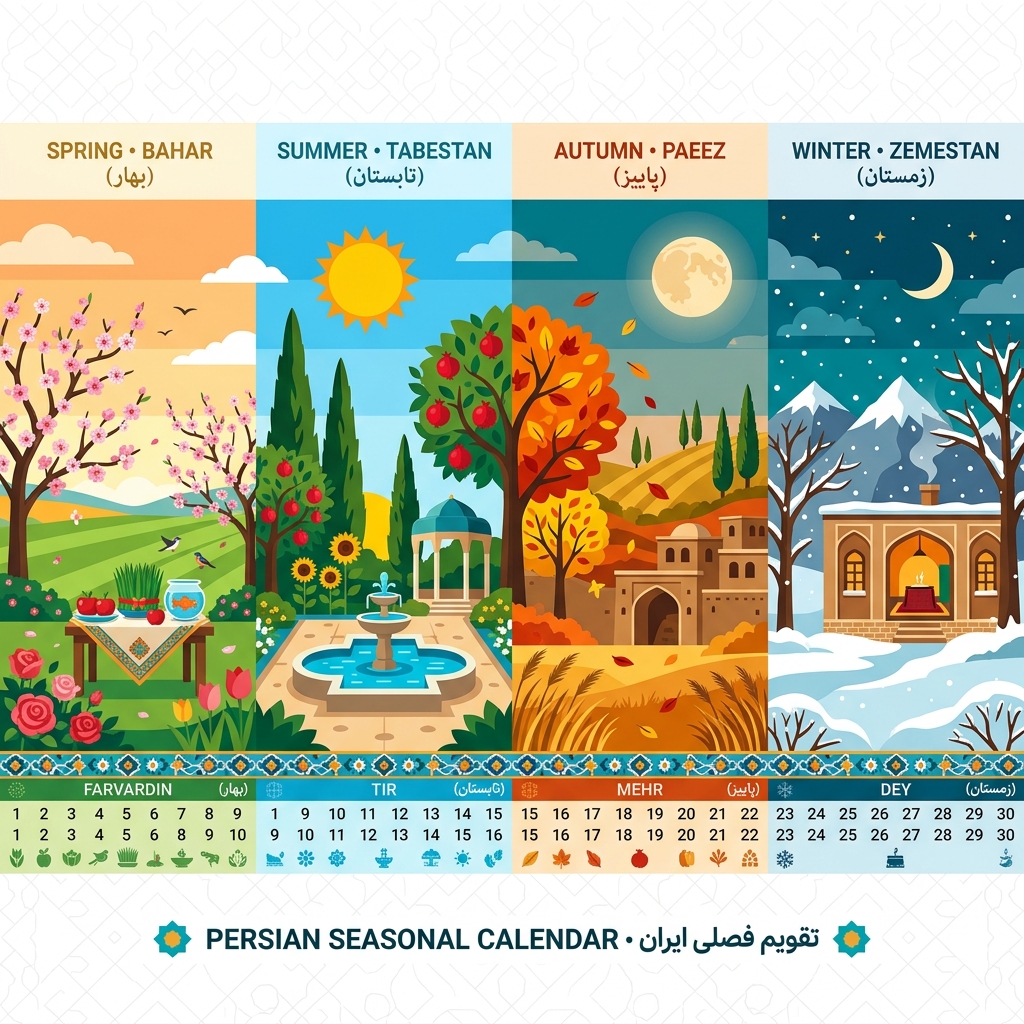
Iranian Holidays 2026 (1405 SH) — Complete Guide
Every national, cultural, ancient Zoroastrian, Monarchist, and historical holiday from Boshkeh's offline library
Last updated: May 22, 2026
Understanding Iran's Authentic Holiday Heritage
Iran officially uses the Solar Hijri (Shamsi) calendar, a precise astronomical calendar that begins at the vernal equinox. The year 1405 SH started on March 21, 2026, and will end on March 20, 2027, in the Gregorian calendar. Unlike lunar calendars, the Shamsi calendar aligns perfectly with the seasons, making the Persian New Year (Nowruz) fall precisely on the spring equinox every year.
The Boshkeh app tracks Iran's holidays across five distinct authentic categories, celebrating the rich historical, ancient, and cultural tapestry of the Persian nation. These categories are:
- National Holidays (NATIONAL): Core celebrations of national sovereignty, historical giants like Cyrus the Great, and seasonal festivals.
- Cultural Celebrations (CULTURAL): Deeply rooted social and traditional festivities, from fire-jumping to nature picnics and poetry.
- Ancient Zoroastrian Festivals (ZOROASTRIAN): Pre-Islamic calendar celebrations (Gahambars and Name-rouz days) that honor natural elements.
- Monarchist & Pahlavi Era Holidays (MONARCHIST): Important modern historical milestones representing the social, educational, and political modernization of Iran.
- Historical Anniversaries (HISTORICAL): Crucial turning points in modern Iranian timeline.
National Holidays
🛢️ Nationalization of Oil Day
Oil Nationalization Day marks the anniversary of the Iranian parliament's historic 1951 vote to nationalize the country's petroleum industry, led by Prime Minister Mohammad Mosaddegh. This movement became a defining moment of modern Iranian sovereignty and economic independence, freeing Iran's wealth from foreign control.
🌸 Nowruz — Persian New Year
Nowruz is the oldest and most celebrated festival in the Iranian calendar, marking the first day of spring and the start of the new solar year. Recognized by UNESCO as part of the Intangible Cultural Heritage of Humanity, it spans a 13-day period of family visits, gift exchanges, and reflection. Families gather around the Haft-sin table featuring seven symbolic items starting with the letter "S" (Sabzeh, Samanu, Senjed, Sir, Sib, Somaq, Serkeh) representing rebirth, health, prosperity, and patience.
🦁 Lion and Sun Day
Commemorating the national symbol of the Lion and Sun (Shir-o-Khorshid) and honoring the brave souls of contemporary history. Proclaimed by Crown Prince Reza Pahlavi, this day specifically commemorates the martyrdom of Majidreza Rahnavard and all martyrs who laid down their lives during the 1401 Woman, Life, Freedom revolution (including Mahsa Amini, Nika Shakarami, Kian Pirfalak, Hamidreza Rouhi, Mohsen Shekari, and others) fighting for liberty and human dignity.
💧 Tirgan Festival
Tirgan is an ancient summer water festival dedicated to Tishtar, the Zoroastrian angel of rain and fertility. It also honors the legendary archer Arash the Swift, who sacrificed his life force to shoot an arrow from Mount Damavand, establishing Iran's northern borders. People celebrate by splashing water, reciting poetry, and wearing colorful wristbands.
🍂 Mehregan Festival
Mehregan is dedicated to Mithra (Mehr), the Zoroastrian divinity of covenant, light, and friendship. Falling near the autumn equinox, it is Iran's ancient harvest thanksgiving festival. Traditional observances include spreading a colorful table of fruits, nuts, sweets, and pomegranates, wearing new clothes, and celebrating community solidarity.
👑 Cyrus the Great Day
An essential national commemoration honoring Cyrus the Great, the legendary founder of the Achaemenid Empire. It marks the day he entered Babylon and issued the famous Cyrus Cylinder—historically recognized as the world's first charter of human rights. Iranians globally celebrate his legacy of religious tolerance and freedom.
🌙 Yalda Night (Shab-e Yalda)
Yalda Night celebrates the winter solstice, the longest night of the year. Families stay awake all night, gathered around a low table (Korsi), eating pomegranates and watermelons (red fruits representing the crimson sunrise) and performing Fal-e Hafez (divining fortunes through the poetry of Hafez) to welcome the return of longer days and the victory of light over darkness.
Cultural Celebrations
🔥 Chaharshanbeh Suri
Celebrated on the eve of the last Wednesday before Nowruz, this vibrant fire festival has ancient roots. People light bonfires in public spaces and jump over them, chanting "Zardi-ye man az to, sorkhi-ye to az man" (my sickly yellow pallor to you, your healthy red glow to me), symbolically cleansing themselves of the past year's bad luck and illness.
🌿 Sizdah Be Dar — Nature Day
Nature Day marks the 13th and final day of the Nowruz holiday period. To ward off the perceived bad luck of the number thirteen, families spend the entire day picnicking outdoors in parks, mountains, or grasslands. A key custom is tying the sprouted greens (Sabzeh) from the Haft-sin table into knots while making a wish, then letting it float away in running water.
🔥 Sadeh Festival
Sadeh (meaning "hundred") is a midwinter celebration held 100 days after the start of winter (in ancient calendars) or 50 days and nights before Nowruz. It commemorates the legendary discovery of fire by King Hushang in the epic Shahnameh. The celebration centers around a massive communal bonfire to repel the darkness and cold of winter.
💖 Sepandarmazgan
The ancient Iranian day of love, earth, and women. Dedicated to Spandarmad (the divinity representing earth, fertility, and humility), this day historically honors wives and mothers. It stands as the authentic Persian equivalent to Valentine's Day, where husbands present gifts to their partners.
📚 Ferdowsi Day
This day pays tribute to Hakim Abul-Qasem Ferdowsi, the world-renowned epic poet and author of the Shahnameh (Book of Kings). Ferdowsi is revered for single-handedly saving the Persian language and recording ancient Iranian mythology and history during a critical era of foreign dominance.
Ancient Zoroastrian Festivals
These ancient seasonal festivals are rooted in the Zoroastrian solar calendar. They celebrate the sacred relationship between humanity, nature, and the elements.
🧠 Bahmangan
Dedicated to Bahman (Vohu Manah), representing the "Good Mind" and wisdom. Historically associated with peace and animal welfare, on this day people practice kindness to animals, refrain from eating meat, and prepare a special vegetarian broth called Ash-e Bahmangan.
☀️ Khordad Sal
Khordad Sal celebrates the anniversary of the birth of Zarathustra (Zoroaster), the ancient Iranian prophet who founded Zoroastrianism. It is a day of spiritual reflection, prayers, and celebratory feasts within Zoroastrian communities.
💧 Abanegan
An ancient festival honoring Aban (the waters) and Anahita, the Zoroastrian divinity of rivers, waters, and fertility. Iranians historically gather near rivers, streams, and natural springs to offer prayers of appreciation and pledge to protect the purity of water.
🕯️ Zartosht No Diso
A solemn day of remembrance marking the death anniversary of the prophet Zarathustra. Zoroastrians gather in fire temples to offer prayers (Avesta recitations), listen to lectures on Zarathustra's life, and participate in communal memorial services.
Monarchist & Pahlavi Era Holidays
These holidays commemorate pivotal historical events of the Pahlavi dynasty, representing the political, educational, and social modernization of 20th-century Iran.
♀️ Women's Emancipation Day
Commemorating the landmark reform on January 7, 1936, when Reza Shah Pahlavi officially enacted the unveiling of women (Kashf-e Hejab), opening the doors to public education, career opportunities, and social freedom for Iranian women. It represents the foundation of women's rights in modern Iran.
📈 White Revolution Day
Marks the anniversary of the 1963 national referendum that approved the White Revolution, a comprehensive series of social and economic reforms proposed by Mohammad Reza Shah Pahlavi. Key reforms included land redistribution to peasants, women's right to vote, and the establishment of the Literacy Corps to eradicate illiteracy.
👨 Reza Shah's Birthday (Father's Day)
The birth anniversary of Reza Shah the Great, founder of the Pahlavi dynasty and the visionary architect of modern Iran. In pre-revolutionary Iran, this day was officially celebrated as Father's Day to honor his legacy as the father of the modern nation.
👑 Coronation Day
Commemorates the joint coronation anniversary of Reza Shah Pahlavi (1926) and Mohammad Reza Shah Pahlavi (1967). It symbolizes the secular constitutional monarchy under which Iran experienced rapid development, cultural expansion, and rising global power.
👑 The Shah's Birthday
Commemorates the birthday of Mohammad Reza Shah Pahlavi, the last Shah of Iran, whose reign saw unprecedented industrialization, economic expansion, social reforms, and international prestige for the country.
👶 Crown Prince's Birthday
Marks the birthday anniversary of Crown Prince Reza Pahlavi, the eldest son of Mohammad Reza Shah Pahlavi and a major symbol of national unity, secular democracy, and cultural heritage for millions of Iranians.
✌️ Liberation of Azerbaijan
Marks December 12, 1946, when the Iranian military successfully entered Tabriz, dismantling the Soviet-backed separatist puppet state (the Azerbaijan People's Government) and restoring the territorial integrity of Iran. It is celebrated as a major victory for national sovereignty and unity.
Historical Anniversaries
📅 3rd of Tir
A significant day in the modern Iranian historical calendar, tracking key developments in contemporary political memory. Boshkeh documents this date to offer a comprehensive timeline of all events shaping Iran's modern history.
Quick Reference: 1405 SH Calendar Holidays
| Holiday Name | Shamsi Date | Gregorian Date (2026) | Category |
|---|---|---|---|
| Women's Emancipation Day | 17 Dey 1404 | Jan 7, 2026 | Monarchist |
| Bahmangan | 2 Bahman 1404 | Jan 22, 2026 | Zoroastrian |
| White Revolution Day | 6 Bahman 1404 | Jan 26, 2026 | Monarchist |
| Sadeh Festival | 10 Bahman 1404 | Jan 30, 2026 | Cultural |
| Sepandarmazgan | 5 Esfand 1404 | Feb 24, 2026 | Cultural |
| Reza Shah's Birthday (Father's Day) | 24 Esfand 1404 | Mar 15, 2026 | Monarchist |
| Chaharshanbeh Suri | 28 Esfand 1404 | Mar 17, 2026 | Cultural |
| Oil Nationalization Day | 29 Esfand 1404 | Mar 20, 2026 | National |
| Nowruz (Persian New Year) | 1 Farvardin 1405 | Mar 21, 2026 | National |
| Khordad Sal (Birth of Zarathustra) | 6 Farvardin 1405 | Mar 26, 2026 | Zoroastrian |
| Sizdah Be Dar (Nature Day) | 13 Farvardin 1405 | Apr 2, 2026 | Cultural |
| Coronation Day | 4 Ordibehesht 1405 | Apr 24, 2026 | Monarchist |
| Ferdowsi Day | 25 Ordibehesht 1405 | May 15, 2026 | Cultural |
| Lion and Sun Day (Martyrs of 1401) | 26 Khordad 1405 | June 16, 2026 | National |
| 3rd of Tir | 3 Tir 1405 | June 24, 2026 | Historical |
| Tirgan Festival | 10 Tir 1405 | July 1, 2026 | National |
| The Shah's Birthday | 4 Aban 1405 | Oct 26, 2026 | Monarchist |
| Cyrus the Great Day | 7 Aban 1405 | Oct 29, 2026 | National |
| Crown Prince's Birthday | 9 Aban 1405 | Oct 31, 2026 | Monarchist |
| Abanegan | 10 Aban 1405 | Nov 1, 2026 | Zoroastrian |
| Liberation of Azerbaijan | 21 Azar 1405 | Dec 12, 2026 | Monarchist |
| Yalda Night (Shab-e Yalda) | 30 Azar 1405 | Dec 21, 2026 | National |
| Zartosht No Diso | 5 Dey 1405 | Dec 26, 2026 | Zoroastrian |
Track Your Cultural Calendar with Boshkeh
Staying connected with ancient traditions, historic milestones, and cultural festivals across different systems can be demanding. Boshkeh bridges this gap with beautiful offline integration.
📅 Boshkeh Tracks All Authentic Holidays Automatically
Boshkeh is a dual-calendar app that displays every genuine Iranian holiday — national, cultural, ancient, and modern monarchist — with smart notifications so you never miss a celebration. Access both Shamsi and Gregorian dates offline, customize notifications, and embrace your heritage wherever you are in the world.
Download Boshkeh FreeFrequently Asked Questions
What are the major holidays in Iran in 2026?
Boshkeh's offline library tracks authentic Iranian holidays across five main categories: National, Cultural, Zoroastrian, Monarchist, and Historical. Major events in 2026 include Nowruz (March 21), Sizdah Be Dar (April 2), Cyrus the Great Day (October 29), Sadeh Festival (January 30), and modern historical milestones such as Women's Emancipation Day (January 7) and the Liberation of Azerbaijan (December 12).
When is Nowruz celebrated in 2026?
Nowruz 2026 falls on Saturday, March 21, 2026, which corresponds to 1 Farvardin 1405 SH in the Persian calendar. The holiday season officially starts with Oil Nationalization Day on March 20, 2026 (29 Esfand 1404 SH).
What is Cyrus the Great Day?
Cyrus the Great Day falls on 7 Aban (October 29, 2026). It commemorates Cyrus the Great, the founder of the Achaemenid Persian Empire, honoring his entry into Babylon and his declaration of the Cyrus Cylinder, widely regarded as the first charter of human rights in history.
What ancient Zoroastrian festivals are in the Persian calendar?
The traditional Persian calendar features ancient Zoroastrian celebrations honoring natural elements and cosmic cycles. These include Bahmangan (January 22), Sadeh Festival (January 30), Khordad Sal (March 26), Tirgan Festival (July 1), Mehregan Festival (October 8), Abanegan (November 1), and Zartosht No Diso (December 26).
When is Sizdah Be Dar in 2026?
Sizdah Be Dar (Nature Day) in 2026 falls on Thursday, April 2, 2026 (13 Farvardin 1405 SH). It marks the final day of the Nowruz celebrations, which Iranians celebrate by spending the entire day picnicking outdoors in nature.
راهنمای کامل تعطیلات ایران ۱۴۰۵ (۲۰۲۶ میلادی) — تقویم جامع بشکه
بررسی جامع تمام مناسبتهای ملی، فرهنگی، باستانی زرتشتی، شاهنشاهی و تاریخی بر اساس کتابخانه آفلاین اپلیکیشن بشکه
آخرین بهروزرسانی: ۱ خرداد ۱۴۰۵
نظام تقویمی و رویدادهای تاریخی ایران
ایران به طور رسمی از تقویم هجری شمسی استفاده میکند که یکی از دقیقترین تقویمهای خورشیدی و نجومی جهان است. سال ۱۴۰۵ هجری شمسی از اول فروردین (۲۱ مارس ۲۰۲۶ میلادی) آغاز شده و تا پایان اسفند ادامه دارد. بر خلاف تقویمهای قمری، تقویم شمسی بر اساس چرخش زمین به دور خورشید و اعتدال بهاری تنظیم میشود که باعث انطباق کامل آن با فصول طبیعی زمین است.
اپلیکیشن بشکه به منظور پاسداشت هویت و پیشینه غنی تاریخی و ملی ایران، تقویم رویدادهای خود را در ۵ دسته اساسی تنظیم کرده است:
- مناسبتهای ملی (NATIONAL): رویدادهایی که نشاندهنده حاکمیت ملی، هویت تاریخی و شخصیتهای برجسته تمدن ایران هستند.
- جشنهای فرهنگی (CULTURAL): آیینهای سنتی و جشنهای پیوسته به فرهنگ عامه ایرانی، شعر و ادب پارسی.
- آیینهای باستانی زرتشتی (ZOROASTRIAN): جشنهای کهن تقویم باستانی و زرتشتی ایران که بر ستایش عناصر طبیعت استوارند.
- مناسبتهای دوران شاهنشاهی پهلوی (MONARCHIST): سالروز رویدادهای سرنوشتساز دوره نوسازی، توسعه صنعتی و احقاق حقوق اجتماعی جامعه ایران.
- رویدادهای تاریخی (HISTORICAL): مناسبتهای ثبت شده در تقویم رویدادهای معاصر کشور.
مناسبتهای ملی
🛢️ روز ملی شدن صنعت نفت
سالروز رأی تاریخی مجلس شورای ملی ایران در سال ۱۳۲۹ به ملی شدن صنعت نفت کشور به رهبری نخستوزیر وقت، دکتر محمد مصدق. این جنبش نماد برجسته حاکمیت ملی و استقلال اقتصادی ایران از استعمار بیگانگان شد.
🌸 نوروز باستانی — آغاز سال نو
کهنترین و فرخندهترین جشن ملی ایرانیان که با اعتدال بهاری و آغاز بهار طبیعت همزمان است. نوروز که توسط یونسکو به عنوان میراث فرهنگی ناملموس بشریت شناخته شده، نماد همدلی، نو شدگی و دیدوبازدید است. سفره شکوهمند هفتسین (سبزه، سمنو، سنجد، سیر، سیب، سماق، سرکه) پیامآور زایش دوباره، تندرستی، فزونی نعمت و صبوری است.
🦁 روز ملی شیر و خورشید
پاسداشت نشان باستانی شیر و خورشید ایرانزمین و بزرگداشت جانباختگان شجاع تاریخ معاصر. این روز که توسط شاهزاده رضا پهلوی اعلام شده است، به یاد جاودانگی و شهادت مجیدرضا رهنورد و تمامی شهدای سرافراز انقلاب زن، زندگی، آزادی ۱۴۰۱ (از جمله مهسا امینی، نیکا شاکرمی، کیان پیرفلک، حمیدرضا روحی، محسن شکاری و دیگر شهدای آزادی) نامگذاری شده تا یاد شهامت و فداکاری آنان در راه آزادی جاودان بماند.
💧 جشن باستانی تیرگان
جشن باستانی تابستانه آبریزان در بزرگداشت تیشتر، ایزد باران و باروری، و یادآور حماسه آرش کمانگیر. او با پرتاب تیر از البرز جان خود را در کمان نهاد تا مرزهای شمال میهن را آشکار کند. ایرانیان این روز را با پاشیدن آب به یکدیگر و خواندن شعر گرامی میدارند.
🍂 جشن ملی مهرگان
جشنی در ستایش میترا (مهر)، ایزد پیمان، دوستی و روشنایی. مهرگان جشن برداشت محصول پاییزه و شکرگزاری بزرگ ایرانیان باستان است. پهن کردن سفره رنگارنگ با انار، شیرینی و گلهای پاییزی و سر دادن نوای همدلی از آیینهای دیرین آن است.
👑 روز بزرگداشت کوروش بزرگ
بزرگداشت باشکوه کوروش بزرگ، بنیانگذار خردمند امپراتوری هخامنشی. این روز یادآور ورود تاریخی او به بابل و صدور استوانه کوروش است که نخستین منشور حقوق بشر در جهان شناخته میشود. ایرانیان سراسر دنیا منش رواداری و آزادی او را گرامی میدارند.
🌙 شب چله (شب یلدا)
جشن یلدا در بلندترین شب سال (انقلاب زمستانی) برگزار میشود. خانوادهها دور کرسی جمع میشوند و با خوردن میوههای سرخ مانند انار و هندوانه (به نشانه سرخی خورشید صبحگاهی) و تفأل به دیوان حافظ، پیروزی نور بر تاریکی و طولانی شدن روزها را نوید میدهند.
جشنهای فرهنگی
🔥 آیین چهارشنبهسوری
در غروب آخرین سهشنبه سال پیش از نوروز، ایرانیان با افروختن آتش در کوی و برزن و پریدن از روی آن، سرود باستانی «زردی من از تو، سرخی تو از من» را زمزمه میکنند. این آیین نماد سوزاندن غمها و ناپاکیهای سال گذشته و استقبال از سلامتی و سرخی است.
🌿 سیزدهبدر — روز طبیعت
سیزدهمین روز نوروز که پایانبخش جشنهای آغاز سال نو است. خانوادههای ایرانی برای دوری از بدسگالی عدد سیزده، تمام روز را در طبیعت و فضاهای سبز سپری میکنند. گره زدن سبزههای سفره هفتسین با آرزوی باروری و گشایش کار و رها کردن آن در آب روان از زیباترین سنتهای این روز است.
🔥 جشن سده
سده جشنی زمستانه است که صد روز پس از آغاز سرما (در تقویم کهن) یا ۵۰ روز و شب مانده به نوروز برپا میشود. سده یادآور کشف افسانهای آتش به دست هوشنگشاه در شاهنامه فردوسی است و با روشن کردن تودههای بزرگ آتش برای فراری دادن سردی و تاریکی همراه است.
💖 جشن سپندارمزگان
روز باستانی عشق، زمین و زن در تمدن ایرانی. این روز به ایزدبانو سپندارمد (مظهر فروتنی، باروری و زمین) اختصاص دارد و در آن مردان با تقدیم هدایا به همسران و مادران خود، عشق و سپاسگزاری خود را ابراز میدارند. این روز زیباترین معادل ایرانی روز ولنتاین است.
📚 روز بزرگداشت فردوسی بزرگ
روز گرامیداشت حکیم ابوالقاسم فردوسی، حماسهسرای بزرگ تاریخ و آفریننده شاهکار جاودان شاهنامه. این روز پاسداشتی برای احیاگر بزرگ زبان پارسی و نگهبان اسطورهها و هویت ملی ایران است.
آیینهای باستانی زرتشتی
این جشنهای فصلی ریشه در فرهنگ باستان و دین زرتشت دارند و نماد سپاسگزاری از آفرینش، احترام به طبیعت و عناصر چهارگانه هستند.
🧠 جشن بهمنگان
جشن بهمنگان در ستایش وهومن (منش نیک و اندیشه خردمندانه) برگزار میشود. این روز با مهربانی با حیوانات و پرهیز از کشتن و خوردن گوشت آنها همراه است و با پخت آش بهمنگان گرامی داشته میشود.
☀️ جشن خرداد سال (زادروز زرتشت)
جشن خرداد سال یادآور روز میلاد فرخنده زرتشت اسپنتمان، پیامآور باستانی ایران زمین است که نزد زرتشتیان با نیایش، شادی و گردهماییهای آیینی گرامی داشته میشود.
💧 جشن باستانی آبانگان
جشنی باستانی در گرامیداشت آبهای روان و چشمهها و در ستایش آناهیتا، ایزدبانوی آب پاک و باروری. ایرانیان باستان در این روز در کنار رودخانهها جمع میشدند و برای پاکیزگی و فزونی آبها دعا میکردند.
🕯️ سالروز درگذشت زرتشت (دی به مهر)
روزی غمانگیز در تقویم زرتشتی که یادآور شهادت و درگذشت پیامبر ایران باستان است. زرتشتیان در سراسر جهان با حضور در آتشکدهها، اوستاخوانی و توزیع نذری این روز را به سوگ مینشینند.
مناسبتهای دوران شاهنشاهی پهلوی
این مناسبتها یادآور نقاط عطف تاریخ نوین ایران در دوران پهلوی هستند که مسیر نوسازی، پیشرفت اجتماعی و بهبود حقوق مدنی جامعه را رقم زدند.
♀️ روز آزادی زنان (۱۷ دی)
بزرگداشت فرمان تاریخی کشف حجاب توسط رضاشاه بزرگ در سال ۱۳۱۴ که سرآغاز برابری حقوقی و ورود رسمی زنان به مدارس، دانشگاهها، ادارات و فعالیتهای اجتماعی ایران نوین گردید.
📈 روز انقلاب سفید
سالروز برگزاری رفراندوم ملی انقلاب سفید در سال ۱۳۴۱ که اصلاحات گسترده اقتصادی و اجتماعی از جمله تقسیم اراضی کشاورزی بین دهقانان، حق رای زنان، و تاسیس سپاه دانش برای سوادآموزی همگانی را به همراه داشت.
👨 زادروز رضاشاه بزرگ (روز پدر)
سالروز تولد رضاشاه پهلوی، سردار سازندگی و بنیانگذار ایران مدرن. این روز پیش از انقلاب به طور رسمی به عنوان «روز پدر» نامگذاری شده بود تا خدمات سترگ و پدرانه او در ساختن ارتش مدرن، راهآهن سرتاسری و لغو کاپیتولاسیون پاس داشته شود.
👑 روز تاجگذاری
گرامیداشت سالروز تاجگذاری مشترک رضاشاه بزرگ در سال ۱۳۰۵ و محمدرضاشاه پهلوی در سال ۱۳۴۶ که یادآور استقرار حکومت قانون و نظام شاهنشاهی مشروطه سکولار و شکوفایی تمدنی ایران است.
👑 زادروز شاهنشاه محمدرضا پهلوی
سالروز زایش آخرین پادشاه ایران که دوران سلطنتش با نوسازی شتابان، اصلاحات همهجانبه، استقرار ثبات سیاسی و رشد پرشتاب اقتصادی همراه بود و ایران را به یکی از قدرتهای بزرگ جهانی بدل ساخت.
👶 زادروز شاهزاده رضا پهلوی
سالروز تولد شاهزاده رضا پهلوی، فرزند ارشد محمدرضاشاه پهلوی و چهره محوری همبستگی ملی، دموکراسی و مبارزات مدنی و صلحآمیز ایرانیان برای بازپسگیری میهن و برقراری حکومت سکولار مردمسالار.
✌️ نجات آذربایجان (۲۱ آذر)
سالروز ورود افتخارآمیز ارتش شاهنشاهی ایران به تبریز در سال ۱۳۲۵ و برچیدن فرقه دموکرات آذربایجان تحت حمایت شوروی. این روز بزرگ نماد بارز حاکمیت ملی، شجاعت ارتش میهن و یکپارچگی سرزمینی ایران است.
رویدادهای تاریخی
📅 رویداد تاریخی سوم تیر
یکی از مناسبتهای ثبت شده در تقویم تاریخی ایران معاصر در کتابخانه بشکه برای ارزیابی و مرور تحولات سیاسی تاریخ نوین کشور.
جدول مرجع: مناسبتهای تقویم ۱۴۰۵ ایران
| نام مناسبت | تاریخ خورشیدی | تاریخ میلادی (2026) | دستهبندی رویداد |
|---|---|---|---|
| روز آزادی زنان (۱۷ دی) | ۱۷ دی ۱۳۰۴ | ۷ ژانویه ۲۰۲۶ | دوران پهلوی |
| جشن باستانی بهمنگان | ۲ بهمن ۱۳۰۴ | ۲۲ ژانویه ۲۰۲۶ | آیین زرتشتی |
| روز انقلاب سفید | ۶ بهمن ۱۳۰۴ | ۲۶ ژانویه ۲۰۲۶ | دوران پهلوی |
| جشن باستانی سده | ۱۰ بهمن ۱۳۰۴ | ۳۰ ژانویه ۲۰۲۶ | جشن فرهنگی |
| جشن ملی سپندارمزگان | ۵ اسفند ۱۳۰۴ | ۲۴ فوریه ۲۰۲۶ | جشن فرهنگی |
| زادروز رضاشاه بزرگ (روز پدر) | ۲۴ اسفند ۱۳۰۴ | ۱۵ مارس ۲۰۲۶ | دوران پهلوی |
| آیین چهارشنبهسوری | ۲۸ اسفند ۱۳۰۴ | ۱۷ مارس ۲۰۲۶ | جشن فرهنگی |
| روز ملی شدن صنعت نفت | ۲۹ اسفند ۱۳۰۴ | ۲۰ مارس ۲۰۲۶ | مناسبت ملی |
| نوروز باستانی (سال نو) | ۱ فروردین ۱۴۰۵ | ۲۱ مارس ۲۰۲۶ | مناسبت ملی |
| جشن خرداد سال (زادروز زرتشت) | ۶ فروردین ۱۴۰۵ | ۲۶ مارس ۲۰۲۶ | آیین زرتشتی |
| سیزدهبدر (روز طبیعت) | ۱۳ فروردین ۱۴۰۵ | ۲ آوریل ۲۰۲۶ | جشن فرهنگی |
| روز تاجگذاری | ۴ اردیبهشت ۱۴۰۵ | ۲۴ آوریل ۲۰۲۶ | دوران پهلوی |
| روز بزرگداشت فردوسی | ۲۵ اردیبهشت ۱۴۰۵ | ۱۵ مه ۲۰۲۶ | جشن فرهنگی |
| روز ملی شیر و خورشید (بزرگداشت شهدای زن، زندگی، آزادی) | ۲۶ خرداد ۱۴۰۵ | ۱۶ ژوئن ۲۰۲۶ | مناسبت ملی |
| رویداد تاریخی سوم تیر | ۳ تیر ۱۴۰۵ | ۲۴ ژوئن ۲۰۲۶ | رویداد تاریخی |
| جشن باستانی تیرگان | ۱۳ تیر ۱۴۰۵ | ۴ ژوئیه ۲۰۲۶ | مناسبت ملی |
| زادروز شاهنشاه محمدرضا پهلوی | ۴ آبان ۱۴۰۵ | ۲۶ اکتبر ۲۰۲۶ | دوران پهلوی |
| روز بزرگداشت کوروش بزرگ | ۷ آبان ۱۴۰۵ | ۲۹ اکتبر ۲۰۲۶ | مناسبت ملی |
| زادروز شاهزاده رضا پهلوی | ۹ آبان ۱۴۰۵ | ۳۱ اکتبر ۲۰۲۶ | دوران پهلوی |
| جشن باستانی آبانگان | ۱۰ آبان ۱۴۰۵ | ۱ نوامبر ۲۰۲۶ | آیین زرتشتی |
| نجات آذربایجان (۲۱ آذر) | ۲۱ آذر ۱۴۰۵ | ۱۲ دسامبر ۲۰۲۶ | دوران پهلوی |
| شب چله (شب یلدا) | ۳۰ آذر ۱۴۰۵ | ۲۱ دسامبر ۲۰۲۶ | مناسبت ملی |
| سالروز درگذشت زرتشت | ۵ دی ۱۴۰۵ | ۲۶ دسامبر ۲۰۲۶ | آیین زرتشتی |
بشکه؛ نگهبان آفلاین هویت و فرهنگ ملی شما
در دنیای پرشتاب امروز، پیوند با فرهنگ غنی و رویدادهای تاریخی ارزشمند گذشته، یکی از ستونهای استوار ماندگاری تمدن ایرانی است. بشکه این پیوند خجسته را برای شما آسان میسازد.
📅 مناسبتهای اصیل ملی را با بشکه دنبال کنید
بشکه تنها یک تقویم معمولی نیست؛ اپلیکیشن دوکاربردی بشکه به صورت آفلاین تمامی جشنهای باستانی، ملی، زرتشتی و رویدادهای تاریخی نوین ایران را با اعلانهای هوشمند و زیبا به شما یادآوری میکند تا هیچگاه آیینها و پیشینه شکوهمند میهن خود را فراموش نکنید.
دانلود رایگان اپلیکیشن بشکهپرسشهای متداول
چه تعطیلات و مناسبتهایی در تقویم ۱۴۰۵ ایران ثبت شده است؟
کتابخانه آفلاین تقویم بشکه مناسبتهای ایران را در ۵ دسته ملی، فرهنگی، باستانی زرتشتی، دوران پهلوی و تاریخی طبقهبندی میکند. از رویدادهای مهم سال ۱۴۰۵ میتوان به نوروز باستان (۱ فروردین)، سیزدهبدر (۱۳ فروردین)، روز بزرگداشت کوروش بزرگ (۷ آبان)، جشن سده (۱۰ بهمن)، روز آزادی زنان (۱۷ دی) و نجات آذربایجان (۲۱ آذر) اشاره کرد.
لحظه تحویل سال ۱۴۰۵ چه زمانی است؟
نوروز سال ۱۴۰۵ در روز شنبه ۱ فروردین ۱۴۰۵ مصادف با ۲۱ مارس ۲۰۲۶ میلادی آغاز میشود که نشاندهنده شروع بهار و اعتدال بهاری است. جزئیات دقیق تحویل سال و شمارش معکوس آن به صورت آفلاین در اپلیکیشن بشکه در دسترس است.
روز بزرگداشت کوروش بزرگ چه روزی است؟
روز بزرگداشت کوروش بزرگ در ۷ آبان (۲۹ اکتبر ۲۰۲۶) برگزار میشود. این روز یادآور ورود کوروش به بابل و صدور استوانه کوروش است که نخستین منشور حقوق بشر جهان محسوب میشود.
چه جشنهای باستانی و زرتشتی در تقویم خورشیدی ایران وجود دارند؟
تقویم ایرانی غنی از جشنهای باستانی است که عناصر طبیعت را گرامی میدارند؛ از جمله بهمنگان (۲ بهمن)، جشن سده (۱۰ بهمن)، جشن خرداد سال (۶ فروردین)، تیرگان (۱۳ تیر)، مهرگان (۱۶ مهر)، آبانگان (۱۰ آبان) و سالروز درگذشت زرتشت (۵ دی).
سیزدهبدر سال ۱۴۰۵ چه روزی است؟
آیین سیزدهبدر (روز طبیعت) در سال ۱۴۰۵ مصادف با روز پنجشنبه ۱۳ فروردین ۱۴۰۵ (۲ آوریل ۲۰۲۶ میلادی) است. ایرانیان این روز را به عنوان پایان دوره جشنهای نوروزی در طبیعت سپری میکنند.