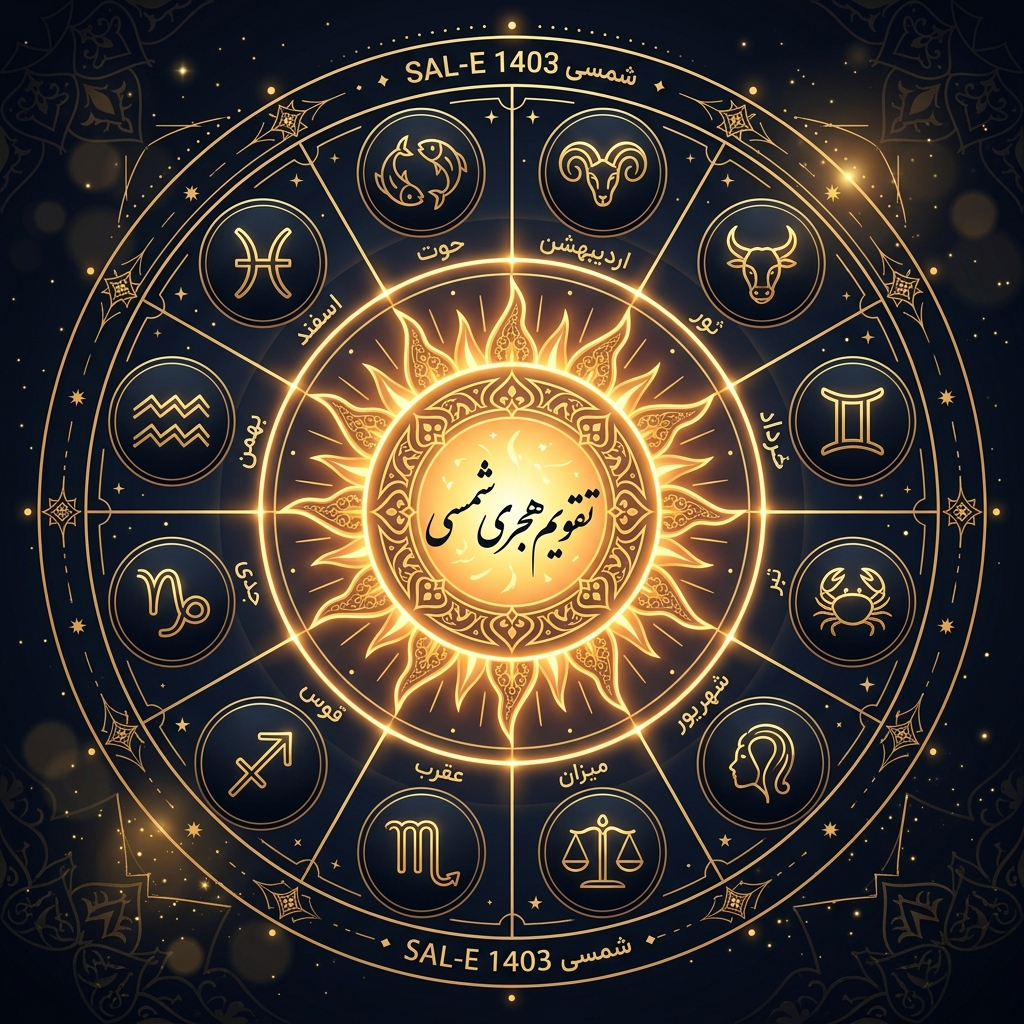
What is the Shamsi (Persian) Calendar? — A Complete Guide
Everything you need to know about the Solar Hijri calendar — its origins, structure, months, and why it remains one of the most accurate calendars in the world.
What Is the Shamsi Calendar?
The Shamsi calendar is the official calendar of Iran and Afghanistan. Its formal name is the Solar Hijri calendar (abbreviated SH), and it is also widely known as the Jalali calendar, the Persian calendar, or simply the Iranian calendar. The word "Shamsi" (شمسی) literally means "solar" in Persian and Arabic, distinguishing it from the Lunar Hijri (Qamari) calendar used in much of the Arab world.
The Shamsi calendar is a solar calendar — meaning it tracks the Earth's revolution around the Sun — and its year begins precisely at the moment of the vernal equinox (the March equinox), which is the astronomical start of spring in the Northern Hemisphere. This moment marks Nowruz (نوروز), the Persian New Year, one of the oldest continuously celebrated holidays in the world.
Because the Shamsi new year is pinned to an actual astronomical event rather than an arbitrary date, it is considered one of the most astronomically accurate calendars in active use today. The year typically begins on March 20 or 21 of the Gregorian calendar.
A Brief History of the Persian Calendar
Ancient Roots
The history of the Persian calendar stretches back over 3,000 years to the ancient Zoroastrian traditions of the Iranian plateau. The earliest known Persian calendars were used during the Achaemenid Empire (550–330 BCE), the dynasty of Cyrus the Great and Darius I. These ancient calendars were solar in nature and contained 12 months of 30 days each, with five extra "Gatha" days added at the end of the year to account for the full solar cycle.
Through the centuries — including the Seleucid, Parthian, and Sassanid periods — the Persian calendar underwent various modifications. The Sassanid-era calendar (224–651 CE) had a sophisticated intercalation system, though it gradually drifted from the astronomical year over time.
The Khayyam Reform (11th Century)
The most significant reform in the history of the Persian calendar occurred in 1079 CE under the Seljuk Sultan Jalal al-Din Malik-Shah I. The sultan assembled a committee of the finest astronomers of the age, including the legendary polymath Omar Khayyam (عمر خیام), to create a new, astronomically precise calendar.
The result was the Jalali calendar (تقویم جلالی), named after the sultan. Khayyam and his colleagues produced a calendar with a remarkably accurate measurement of the tropical year — approximately 365.2424 days. This was more precise than the Gregorian calendar (introduced 500 years later in 1582), which estimates the year at 365.2425 days. The Jalali calendar's error amounts to roughly one day every 3,770 years, compared to the Gregorian calendar's one day every 3,236 years.
Modern Standardization
The modern Solar Hijri calendar was formally adopted as Iran's official calendar on March 31, 1925, during the early Pahlavi dynasty. The calendar adopted the Hijri epoch (the migration of Prophet Muhammad from Mecca to Medina in 622 CE) but retained its solar calculation. In 1957, the Afghan government also officially adopted the Solar Hijri calendar, though with some differences in month names.
Structure of the Shamsi Calendar
The Shamsi calendar consists of 12 months totaling either 365 or 366 days. The structure follows a logical, astronomy-driven pattern:
- First 6 months: Each has 31 days — this corresponds to the longer period the Sun spends in the northern ecliptic during spring and summer
- Next 5 months: Each has 30 days — corresponding to the shorter autumn and early-winter period
- Last month: Has 29 days in a regular year and 30 days in a leap year
This pattern (6×31 + 5×30 + 29 = 365 days) is not arbitrary — it reflects the actual variation in the Earth's orbital speed. The Earth moves slower when it is farther from the Sun (around July, during the first half of the Shamsi year), so those months appear to be "longer."
The 12 Months of the Shamsi Calendar
Below is the complete list of all twelve months, with their English transliteration, Farsi name, approximate Gregorian equivalent, and number of days:
| # | English Name | Farsi Name | Approx. Gregorian | Days |
|---|---|---|---|---|
| 1 | Farvardin | فروردین | Mar 20 – Apr 19 | 31 |
| 2 | Ordibehesht | اردیبهشت | Apr 20 – May 20 | 31 |
| 3 | Khordad | خرداد | May 21 – Jun 20 | 31 |
| 4 | Tir | تیر | Jun 21 – Jul 21 | 31 |
| 5 | Mordad | مرداد | Jul 22 – Aug 21 | 31 |
| 6 | Shahrivar | شهریور | Aug 22 – Sep 21 | 31 |
| 7 | Mehr | مهر | Sep 22 – Oct 21 | 30 |
| 8 | Aban | آبان | Oct 22 – Nov 20 | 30 |
| 9 | Azar | آذر | Nov 21 – Dec 20 | 30 |
| 10 | Dey | دی | Dec 21 – Jan 19 | 30 |
| 11 | Bahman | بهمن | Jan 20 – Feb 18 | 30 |
| 12 | Esfand | اسفند | Feb 19 – Mar 19 | 29/30 |
💡 Fun fact: Many of these month names are derived from the ancient Avestan language and have Zoroastrian origins. For example, "Farvardin" comes from the Avestan word Fravashi, referring to guardian spirits, and "Mehr" comes from Mithra, the ancient deity of light and covenant.
How Does the Shamsi Calendar Differ from the Gregorian Calendar?
Both the Shamsi and Gregorian calendars are solar calendars — they both track the Earth's orbit around the Sun and have approximately 365.25 days per year. However, they differ in several important ways:
- Epoch (Starting Year): The Gregorian calendar counts from the estimated birth year of Jesus Christ (1 AD). The Shamsi calendar counts from the year of the Hijra — Prophet Muhammad's migration from Mecca to Medina — in 622 CE. So the Gregorian year 2026 roughly corresponds to Shamsi year 1404–1405.
- New Year's Day: The Gregorian new year starts on January 1, which has no astronomical significance. The Shamsi new year starts at the precise moment of the vernal equinox (around March 20–21), making it astronomically anchored.
- Month Lengths: Gregorian months have an irregular distribution of 28, 29, 30, or 31 days. The Shamsi calendar follows a clean, logical pattern: 31-31-31-31-31-31-30-30-30-30-30-29(30).
- Accuracy: The Shamsi calendar's leap year system, based on astronomical observation, produces an average year length that is slightly more accurate than the Gregorian system.
How Does the Shamsi Calendar Differ from the Islamic (Lunar Hijri) Calendar?
The Shamsi calendar is sometimes confused with the Islamic Hijri calendar because both use the Hijra as their epoch. However, the two calendars are fundamentally different:
- Solar vs. Lunar: The Shamsi calendar is solar (365 or 366 days/year). The Islamic Hijri calendar is purely lunar (354 or 355 days/year), tracking the Moon's phases.
- Year Length Gap: Because the lunar year is about 11 days shorter than the solar year, the Islamic Hijri calendar "drifts" through the seasons over a 33-year cycle. The Shamsi calendar stays fixed to the seasons.
- Year Number Divergence: Despite starting from the same historical event, the calendars now show different year numbers. The Islamic Hijri year is currently around 1447, while the Shamsi year is around 1404–1405 — a difference caused by the shorter lunar year accumulating more years over the same period.
- Usage: The Islamic Hijri calendar is used for determining religious observances (Ramadan, Eid, Hajj) across the Muslim world. The Shamsi calendar is used for civil, administrative, and everyday purposes in Iran and Afghanistan.
Leap Years in the Shamsi Calendar
Leap years in the Shamsi calendar add one extra day to the last month (Esfand), making it 30 days instead of 29. The leap year calculation is based on precise astronomical observation of the vernal equinox.
In practice, the Shamsi calendar follows an approximate 2820-year grand cycle for leap year calculation. Within this cycle, leap years occur roughly every 4 years, but with specific adjustments. The most commonly used algorithm distributes 683 leap years across every 2820-year period, resulting in an average year length of approximately 365.24219 days — which is extraordinarily close to the actual tropical year of 365.24219 days.
A simplified rule of thumb: leap years typically fall every 4 years, similar to the Gregorian calendar. However, unlike the Gregorian system (which skips leap years in most century years), the Shamsi system uses a different correction pattern based on multiples within 2820-year cycles. In modern practice, the exact moment of the vernal equinox is calculated by the Institute of Geophysics at the University of Tehran, ensuring each year starts at precisely the right astronomical moment.
Countries That Officially Use the Shamsi Calendar
The Shamsi (Solar Hijri) calendar is the official calendar in two countries:
- Iran: The calendar is used for all civil, governmental, educational, and business purposes. All government documents, school schedules, bank transactions, and media references use Shamsi dates. Iranians commonly refer to it as the "Shamsi calendar" (تقویم شمسی) or "Jalali calendar" (تقویم جلالی).
- Afghanistan: The Solar Hijri calendar is also official, though some month names differ. For example, the second month is called "Sawr" (ثور) in Dari/Pashto rather than "Ordibehesht." The Afghan version of the calendar was adopted in 1957.
Beyond official usage, millions of Persian-speaking people in the diaspora — in the United States, Canada, the United Kingdom, Germany, Australia, Turkey, and the UAE — continue to use the Shamsi calendar for personal, cultural, and social purposes. It remains central to the celebration of Nowruz and other Persian holidays.
Why the Shamsi Calendar Matters Today
The Shamsi calendar is more than just a timekeeping system — it is a living connection to one of the world's oldest continuous civilizations. For over 80 million Iranians and 40 million Afghans, it structures daily life, from school semesters and fiscal years to wedding dates and birthday celebrations.
For the global Persian-speaking diaspora, the Shamsi calendar serves as a cultural anchor. Knowing that "today is the 2nd of Khordad" carries a sense of identity and belonging that a Gregorian date alone cannot provide. It connects people to the rhythms of the ancient Zoroastrian seasonal festivals, the poetry of Hafez and Rumi, and the shared traditions of Nowruz, Yalda Night, and Chaharshanbe Suri.
How Boshkeh Makes Working with the Shamsi Calendar Easy
If you work with the Shamsi calendar — whether you're an Iranian professional managing deadlines, a student tracking academic schedules, or a member of the diaspora staying connected to your cultural roots — Boshkeh is designed for you.
- Full Shamsi Calendar Support: Boshkeh displays Shamsi dates natively, so you can see today's date in both Shamsi and Gregorian at a glance.
- Automatic Date Conversion: Seamlessly convert between Shamsi, Gregorian, and Islamic Hijri dates without manual calculation.
- Persian Holidays & Events: All major Iranian and Afghan holidays — Nowruz, Sizdah Bedar, Yalda Night, Chaharshanbe Suri, and dozens more — are built in.
- Google Calendar Sync: Sync your Shamsi-based events with Google Calendar so your Persian holidays appear alongside your work meetings.
- AI-Powered Insights: Get cultural and historical context about each day's significance, powered by intelligent AI.
- Privacy-First Design: Your calendar data stays secure and private. No tracking, no ads.
Try Boshkeh — The Modern Persian Calendar
Experience the Shamsi calendar like never before. Download free on Google Play or try Boshkeh Lite on the web.
Get Boshkeh
تقویم شمسی چیست؟ — راهنمای کامل
هر آنچه باید درباره تقویم هجری خورشیدی بدانید — تاریخچه، ساختار، ماهها، سال کبیسه و تفاوت آن با تقویم میلادی و قمری.
تقویم شمسی چیست؟
تقویم شمسی، که نام رسمی آن تقویم هجری خورشیدی (مخفف: ه.ش.) است، تقویم رسمی کشورهای ایران و افغانستان به شمار میرود. این تقویم همچنین با نامهای تقویم جلالی، تقویم ایرانی و گاهشمار خورشیدی نیز شناخته میشود. واژه «شمسی» از ریشه عربی «شمس» به معنای خورشید گرفته شده و آن را از تقویم هجری قمری متمایز میسازد.
تقویم شمسی یک تقویم خورشیدی است — یعنی بر اساس گردش زمین به دور خورشید تنظیم شده — و سال آن دقیقاً در لحظه اعتدال بهاری (لحظه تحویل سال) آغاز میشود. این لحظه که آغاز بهار نجومی در نیمکره شمالی است، مصادف با نوروز (عید نوروز) میباشد — یکی از کهنترین جشنهایی که به طور پیوسته در جهان برگزار میشود.
از آنجا که آغاز سال شمسی به یک رویداد نجومی واقعی وابسته است (و نه به تاریخ قراردادی)، تقویم شمسی یکی از دقیقترین تقویمهای فعال در جهان محسوب میشود. سال نو شمسی معمولاً در ۲۰ یا ۲۱ مارس میلادی آغاز میگردد.
تاریخچه مختصر تقویم ایرانی
ریشههای باستانی
تاریخچه تقویم ایرانی به بیش از ۳۰۰۰ سال پیش و سنتهای زرتشتی فلات ایران بازمیگردد. کهنترین تقویمهای شناختهشده ایرانی در دوران امپراتوری هخامنشی (۵۵۰-۳۳۰ پیش از میلاد) — سلسله کوروش بزرگ و داریوش اول — مورد استفاده قرار میگرفتند. این تقویمهای باستانی ماهیت خورشیدی داشتند و شامل ۱۲ ماه ۳۰ روزه به همراه ۵ روز اضافی «گاتا» در پایان سال بودند تا چرخه خورشیدی کامل شود.
در طول قرنها — از دوران سلوکی، اشکانی و ساسانی — تقویم ایرانی اصلاحات متعددی را تجربه کرد. تقویم دوره ساسانی (۲۲۴-۶۵۱ میلادی) سیستم کبیسهگیری پیشرفتهای داشت، هرچند به تدریج از سال نجومی فاصله گرفت.
اصلاحات خیامی (قرن پنجم هجری / یازدهم میلادی)
مهمترین اصلاح در تاریخ تقویم ایرانی در سال ۴۵۸ هجری (۱۰۷۹ میلادی) و به دستور سلطان جلالالدین ملکشاه سلجوقی انجام شد. سلطان هیئتی از برجستهترین اخترشناسان زمان خود را گرد آورد که در میان آنها دانشمند نامدار عمر خیام حضور داشت.
نتیجه کار این هیئت، تقویم جلالی بود که به نام سلطان نامگذاری شد. خیام و همکارانش تقویمی ساختند با اندازهگیری فوقالعاده دقیق سال اعتدالی — تقریباً ۳۶۵٫۲۴۲۴ روز. این رقم دقیقتر از تقویم میلادی (گرگوری) است که ۵۰۰ سال بعد در سال ۱۵۸۲ معرفی شد و سال را ۳۶۵٫۲۴۲۵ روز برآورد میکند. خطای تقویم جلالی حدود یک روز در هر ۳۷۷۰ سال است، در حالی که خطای تقویم میلادی یک روز در هر ۳۲۳۶ سال میباشد.
استانداردسازی مدرن
تقویم هجری خورشیدی مدرن در ۱۱ فروردین ۱۳۰۴ (۳۱ مارس ۱۹۲۵) در دوران اولیه سلسله پهلوی به عنوان تقویم رسمی ایران پذیرفته شد. این تقویم مبدأ هجری (مهاجرت پیامبر اسلام از مکه به مدینه در سال ۶۲۲ میلادی) را اتخاذ کرد اما محاسبات خورشیدی خود را حفظ نمود. در سال ۱۳۳۶ (۱۹۵۷ میلادی) دولت افغانستان نیز رسماً تقویم هجری خورشیدی را پذیرفت، هرچند با تفاوتهایی در نام ماهها.
ساختار تقویم شمسی
تقویم شمسی شامل ۱۲ ماه با مجموع ۳۶۵ یا ۳۶۶ روز است. ساختار آن از الگویی منطقی و نجومی پیروی میکند:
- ۶ ماه اول: هر کدام ۳۱ روز — مطابق با دوره طولانیتری که خورشید در مدار شمالی طی بهار و تابستان سپری میکند
- ۵ ماه بعدی: هر کدام ۳۰ روز — مطابق با دوره کوتاهتر پاییز و اوایل زمستان
- ماه آخر: در سال عادی ۲۹ روز و در سال کبیسه ۳۰ روز
این الگو (۶×۳۱ + ۵×۳۰ + ۲۹ = ۳۶۵ روز) تصادفی نیست — بلکه بازتابی از تغییرات واقعی سرعت مداری زمین است. زمین هنگامی که از خورشید دورتر است (حدود تیرماه) کندتر حرکت میکند و در نتیجه آن ماهها «بلندتر» به نظر میرسند.
۱۲ ماه تقویم شمسی
فهرست کامل دوازده ماه تقویم شمسی با نام فارسی، نام انگلیسی، معادل تقریبی میلادی و تعداد روزها:
| # | نام فارسی | نام انگلیسی | معادل تقریبی میلادی | روز |
|---|---|---|---|---|
| ۱ | فروردین | Farvardin | ۲۰ مارس – ۱۹ آوریل | ۳۱ |
| ۲ | اردیبهشت | Ordibehesht | ۲۰ آوریل – ۲۰ مه | ۳۱ |
| ۳ | خرداد | Khordad | ۲۱ مه – ۲۰ ژوئن | ۳۱ |
| ۴ | تیر | Tir | ۲۱ ژوئن – ۲۱ ژوئیه | ۳۱ |
| ۵ | مرداد | Mordad | ۲۲ ژوئیه – ۲۱ اوت | ۳۱ |
| ۶ | شهریور | Shahrivar | ۲۲ اوت – ۲۱ سپتامبر | ۳۱ |
| ۷ | مهر | Mehr | ۲۲ سپتامبر – ۲۱ اکتبر | ۳۰ |
| ۸ | آبان | Aban | ۲۲ اکتبر – ۲۰ نوامبر | ۳۰ |
| ۹ | آذر | Azar | ۲۱ نوامبر – ۲۰ دسامبر | ۳۰ |
| ۱۰ | دی | Dey | ۲۱ دسامبر – ۱۹ ژانویه | ۳۰ |
| ۱۱ | بهمن | Bahman | ۲۰ ژانویه – ۱۸ فوریه | ۳۰ |
| ۱۲ | اسفند | Esfand | ۱۹ فوریه – ۱۹ مارس | ۲۹/۳۰ |
💡 نکته جالب: بسیاری از نام ماهها ریشه در زبان اوستایی و فرهنگ زرتشتی دارند. مثلاً «فروردین» از واژه اوستایی «فَرَوَشی» به معنای روانهای نگهبان گرفته شده و «مهر» از واژه «میترا» — ایزد نور و پیمان — برگرفته شده است.
تفاوت تقویم شمسی با تقویم میلادی (گرگوری) چیست؟
هر دو تقویم شمسی و میلادی تقویمهای خورشیدی هستند — هر دو بر اساس گردش زمین به دور خورشید تنظیم شدهاند و تقریباً ۳۶۵٫۲۵ روز در سال دارند. با این حال، تفاوتهای مهمی بین آنها وجود دارد:
- مبدأ (سال صفر): تقویم میلادی از سال تخمینی تولد حضرت عیسی (مسیح) آغاز میشود. تقویم شمسی از سال هجرت پیامبر اسلام از مکه به مدینه (۶۲۲ میلادی) شروع میشود. بنابراین سال ۲۰۲۶ میلادی تقریباً معادل سال ۱۴۰۴-۱۴۰۵ شمسی است.
- آغاز سال: سال میلادی از اول ژانویه شروع میشود که هیچ اهمیت نجومی ندارد. سال شمسی دقیقاً در لحظه اعتدال بهاری (حدود ۲۰-۲۱ مارس) آغاز میشود و از نظر نجومی کاملاً دقیق است.
- طول ماهها: ماههای میلادی توزیع نامنظمی از ۲۸، ۲۹، ۳۰ و ۳۱ روز دارند. تقویم شمسی الگوی منطقی و منظمی دارد: ۳۱-۳۱-۳۱-۳۱-۳۱-۳۱-۳۰-۳۰-۳۰-۳۰-۳۰-۲۹(۳۰).
- دقت: سیستم کبیسهگیری تقویم شمسی، که بر پایه مشاهدات نجومی استوار است، میانگین طول سالی تولید میکند که اندکی دقیقتر از سیستم میلادی است.
تفاوت تقویم شمسی با تقویم هجری قمری چیست؟
تقویم شمسی گاهی با تقویم هجری قمری اشتباه گرفته میشود، زیرا هر دو مبدأ هجرت را دارند. اما این دو تقویم تفاوتهای اساسی دارند:
- خورشیدی در مقابل قمری: تقویم شمسی خورشیدی است (۳۶۵ یا ۳۶۶ روز در سال). تقویم هجری قمری کاملاً بر اساس ماه (قمر) تنظیم شده (۳۵۴ یا ۳۵۵ روز در سال).
- جابجایی فصلی: چون سال قمری حدود ۱۱ روز از سال خورشیدی کوتاهتر است، تقویم هجری قمری در طول یک دوره ۳۳ ساله در تمام فصلها «جابجا» میشود. تقویم شمسی همیشه با فصلها هماهنگ باقی میماند.
- تفاوت شماره سال: با وجود شروع از یک رویداد تاریخی مشترک، دو تقویم اکنون شماره سالهای متفاوتی نشان میدهند. سال هجری قمری اکنون حدود ۱۴۴۷ و سال شمسی حدود ۱۴۰۴-۱۴۰۵ است — تفاوتی که ناشی از کوتاهتر بودن سال قمری و در نتیجه انباشت سالهای بیشتر در همان بازه زمانی است.
- کاربرد: تقویم هجری قمری برای تعیین مناسبتهای مذهبی (رمضان، عید فطر، حج) در سراسر جهان اسلام استفاده میشود. تقویم شمسی برای امور اداری، مدنی و روزمره در ایران و افغانستان به کار میرود.
سال کبیسه در تقویم شمسی
سالهای کبیسه در تقویم شمسی یک روز اضافی به آخرین ماه (اسفند) اضافه میکنند و آن را از ۲۹ روز به ۳۰ روز تبدیل میسازند. محاسبه سال کبیسه بر اساس مشاهده دقیق نجومی اعتدال بهاری انجام میشود.
در عمل، تقویم شمسی از یک چرخه بزرگ ۲۸۲۰ ساله برای محاسبه سال کبیسه پیروی میکند. در این چرخه، ۶۸۳ سال کبیسه در طول ۲۸۲۰ سال توزیع شدهاند و میانگین طول سال تقریباً ۳۶۵٫۲۴۲۱۹ روز خواهد بود — عددی که به طور شگفتانگیزی به طول واقعی سال اعتدالی نزدیک است.
قاعده ساده: سالهای کبیسه معمولاً هر ۴ سال یکبار رخ میدهند، مشابه تقویم میلادی. اما برخلاف سیستم میلادی (که در بیشتر سالهای قرنی کبیسه را حذف میکند)، سیستم شمسی از الگوی اصلاحی متفاوتی بر اساس مضارب در چرخههای ۲۸۲۰ ساله استفاده میکند. در عمل، لحظه دقیق اعتدال بهاری توسط مؤسسه ژئوفیزیک دانشگاه تهران محاسبه میشود تا اطمینان حاصل شود هر سال دقیقاً در لحظه نجومی صحیح آغاز میگردد.
کشورهایی که رسماً از تقویم شمسی استفاده میکنند
تقویم شمسی (هجری خورشیدی) تقویم رسمی دو کشور است:
- ایران: تقویم شمسی برای تمام امور اداری، دولتی، آموزشی و تجاری استفاده میشود. تمام اسناد دولتی، برنامههای آموزشی، تراکنشهای بانکی و مراجع رسانهای از تاریخ شمسی استفاده میکنند. ایرانیان معمولاً آن را «تقویم شمسی» یا «تقویم جلالی» مینامند.
- افغانستان: تقویم هجری خورشیدی نیز رسمی است، هرچند برخی نام ماهها متفاوت است. مثلاً ماه دوم در دری/پشتو «ثور» نامیده میشود نه «اردیبهشت». نسخه افغانی تقویم در سال ۱۳۳۶ (۱۹۵۷ میلادی) پذیرفته شد.
فراتر از استفاده رسمی، میلیونها فارسیزبان در سراسر جهان — در ایالات متحده، کانادا، بریتانیا، آلمان، استرالیا، ترکیه و امارات — همچنان از تقویم شمسی برای مقاصد شخصی، فرهنگی و اجتماعی استفاده میکنند. این تقویم نقشی محوری در جشن نوروز و دیگر اعیاد ایرانی دارد.
چرا تقویم شمسی امروز اهمیت دارد؟
تقویم شمسی فراتر از یک سیستم زمانسنجی است — پیوندی زنده با یکی از کهنترین تمدنهای مداوم جهان. برای بیش از ۸۰ میلیون ایرانی و ۴۰ میلیون افغان، این تقویم زندگی روزمره را سامان میدهد — از نیمسالهای تحصیلی و سالهای مالی گرفته تا تاریخ عروسی و جشن تولد.
برای فارسیزبانان مقیم خارج، تقویم شمسی یک لنگرگاه فرهنگی است. دانستن اینکه «امروز دوم خرداد است» احساس هویت و تعلقی را منتقل میکند که یک تاریخ میلادی به تنهایی نمیتواند ایجاد کند. این تقویم مردم را به آهنگ جشنهای کهن زرتشتی، اشعار حافظ و مولانا و سنتهای مشترک نوروز، شب یلدا و چهارشنبهسوری پیوند میدهد.
بُشکه چگونه کار با تقویم شمسی را آسان میکند؟
اگر با تقویم شمسی سر و کار دارید — چه یک متخصص ایرانی باشید که ضربالاجلها را مدیریت میکند، چه دانشجویی که برنامه تحصیلی را پیگیری میکند، یا عضوی از جامعه ایرانیان خارج از کشور که میخواهد با ریشههای فرهنگی خود در ارتباط بماند — بُشکه برای شما طراحی شده است.
- پشتیبانی کامل از تقویم شمسی: بُشکه تاریخهای شمسی را به صورت بومی نمایش میدهد و میتوانید تاریخ امروز را همزمان به شمسی و میلادی ببینید.
- تبدیل خودکار تاریخ: تبدیل بیدرنگ بین تاریخهای شمسی، میلادی و هجری قمری بدون محاسبه دستی.
- مناسبتها و تعطیلات ایرانی: تمام مناسبتهای مهم ایرانی و افغانی — نوروز، سیزدهبدر، شب یلدا، چهارشنبهسوری و دهها مناسبت دیگر — به صورت پیشفرض در تقویم موجود است.
- همگامسازی با Google Calendar: رویدادهای شمسی خود را با تقویم گوگل همگامسازی کنید تا تعطیلات ایرانی در کنار جلسات کاری شما نمایش داده شوند.
- بینشهای هوش مصنوعی: اطلاعات فرهنگی و تاریخی درباره اهمیت هر روز، با قدرت هوش مصنوعی پیشرفته.
- طراحی حریم خصوصی محور: دادههای تقویم شما امن و خصوصی باقی میمانند. بدون ردیابی، بدون تبلیغ.
بُشکه را امتحان کنید — تقویم مدرن شمسی
تقویم شمسی را متفاوت تجربه کنید. دانلود رایگان از گوگلپلی یا استفاده آنلاین از بُشکه لایت.
دریافت بُشکه